Monday, 2 September 2013

Fabulous day yesterday

Michael and I had a fabulous day yesterday.  We went to a poultry auction!


Now round these parts Fabian Eagle is renowned for his poultry auctions, regularly holding one at Swaffham.  Yesterday's sale was the 24th Annual Summer auction at Eldon Farm Auction Centre, Mildenhall.

Deadstock and Cagebirds started at 11am; 11.30am saw Waterfowl followed by Pheasants; 12noon saw Pigeons followed by Large fowl and finally Bantams.  Two auctioneers were simulaneously selling, it was a hive of activity.  Over 700 lots were auctioned off, excluding all the deadstock of drinkers, rearing equipment and incubators.

I was amazed at the number of birds for sale, especially of ducks, I never knew there was such a wide variety of breeds.

Here are just some of the birds that were for sale -

A pair of Bourbon Red Turkeys on the left, which made £25 and a pair of Pied Turkeys on the right

A pair of Peafowl made £85

Light Sussex trio
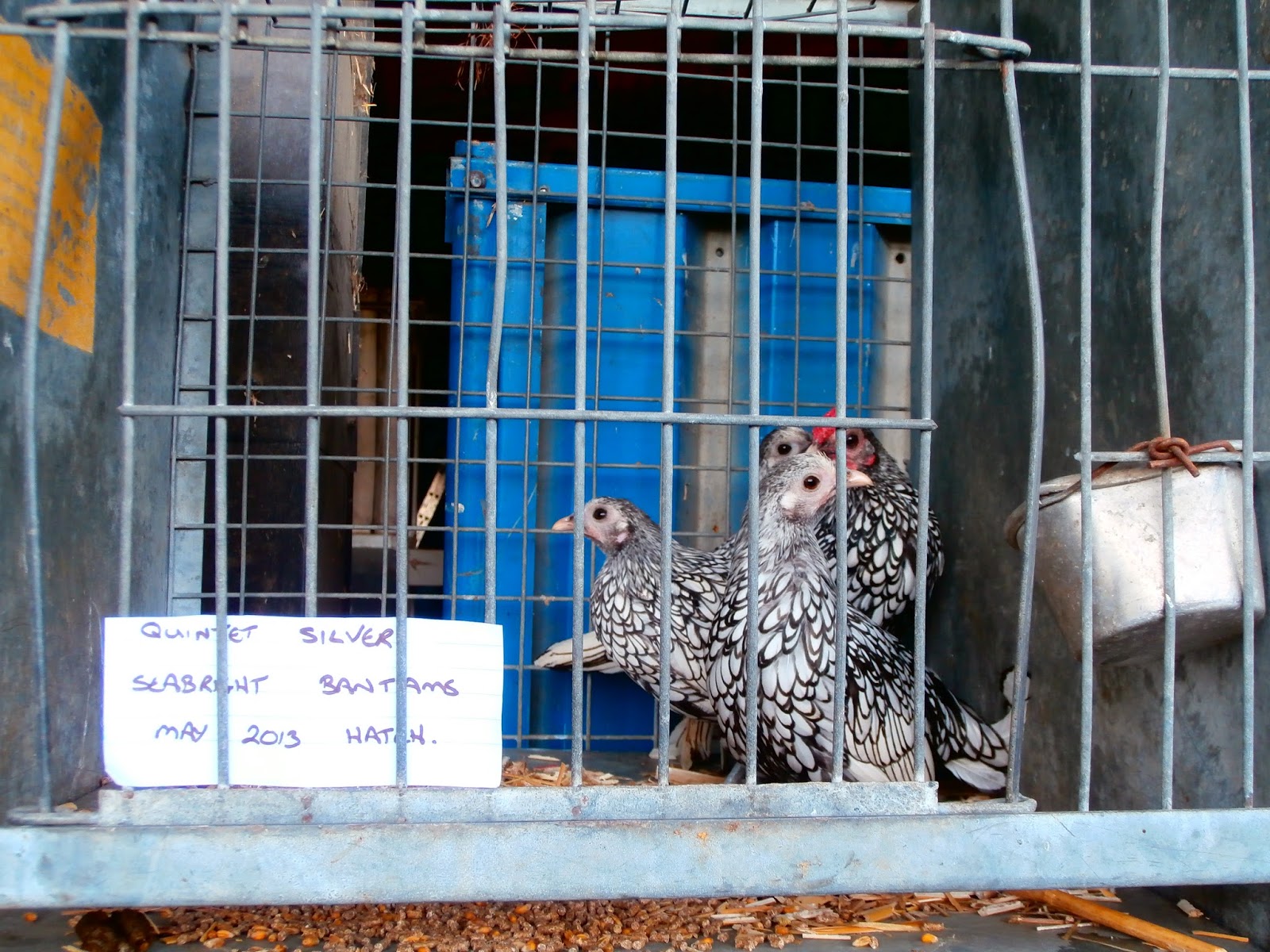
Seabrights

Bantam Buff Orpington quartet

Three Partridge Wyandotte pullets

Trio of Rouen, made £28

A pair of Buff African geese made £70

Trumpeter female Swan, lost her mate, made £150

Pair of Sebastopol Geese, made £70

Pair of Crested ducks

A pair of red and white Frillback pigeons, unsold, in fact not of the eight pens of pigeons sold

Two pairs of Arch Angel Pigeons

Trio of Speckled Sussex pullets, made £48

Trio of Buff Columbian Brahma, made £55, these were lovely, wanted to bring these home

Trio of Gold Seabrights

Pair of Bahama Pintails
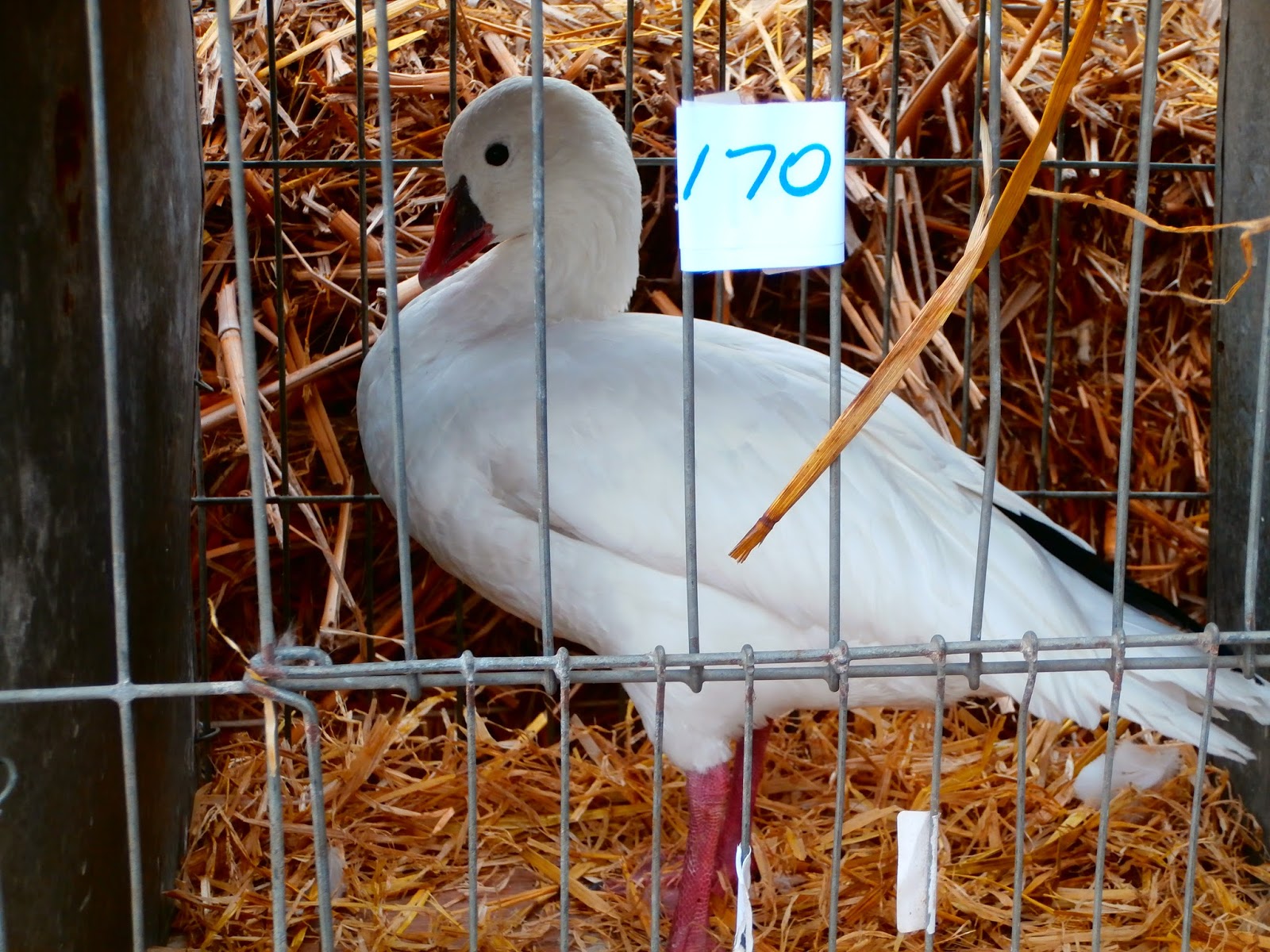
One Ross Gander, made £90

Pair of Orange Ringed Teal

Pair of Ross geese, made £120

Trio of Buff Laced Wyandotte bantams

Quartet of Buff Sussex pullets

Blue Splash rosecomb bantams

As you can see all and sundry were there, with some amazing prices being reached, but most making between £25 - £50 per pen.  Top price went to a quartet of Vulturine Guinea fowl, one male and three females, which made, a whopping £850!

You'll have to check back tomorrow to see if we came home with anything!

Stats today -

Eggs produced = 11

Sales -
2 x bags of Tomatoes £2.00
1 x Cucumber £0.60

Expenses -
Nil

Sunday, 1 September 2013

August Statistics

Well, August was a good month, takings were up on July, so am really pleased.

Here's the breakdown -

Sales -

22 dozen eggs £40.30
14 Cucumbers £8.40
8 Geranium plants £12.00
2 x Herb plants £1.00
3 bags Carrots £2.25
18 bags Tomatoes £16.50

Total £80.45

Expenses -

1 x Large Greenhouse £383.00

Still a long way to go to recoup the greenhouse money, but hey that was a long term investment, and it's now harvest time so fingers crossed we'll recoup in no time.

Today's stats -

Sales -

1 dozen eggs £1.80
1 x bag Bramley apples £1.00
1 x Tomatoes £1.00
1 x bag French beans £0.50

Expenses -

Nil

Friday, 30 August 2013

What more Swallows?

We seem to have had quite a successful and productive year for bird production this year, that is with wild birds.  We've hatched, (well not us exactly, we've just provided somewhere for the birds to do it themselves!), a clutch of blue tits, a clutch of wren chicks, a clutch of gold finch chicks in the wisteria and a nest of three swallow chicks.  Until now ...


It seems they've managed to hatch out another clutch.  I did think it was rather strange when I saw swallows flying backwards and forwards in and out of the log store, with bits of various material in their beaks, never did I think they would hatch out another clutch.  I am a bit worried that these latest chicks will be strong enough to fly all the way to their winter destinations i.e. South America, Africa or South Asia, I do hope they will manage it, they've only got until October, lets hope it stays warm here long enough so they don't have to rush back.

I tried to capture a close up, but I don't think my camera's sophisticated enough and they fly so fast, so I just snapped them chin-wagging on the telephone wires!


And just look at that gorgeous blue sky here in Norfolk.  Love to see them all lined up, felt like asking them if they wanted a cup of tea and a digestive!

Stats today -

Eggs produced = 11

Sales -
1 dozen eggs £1.80

Expenses -
Nil

Thursday, 29 August 2013

More Great British Bake off inspiration

I seem to be on a bread making splurge at the moment - don't really know why, unless it has something to do with that 'stuff' they sell in the supermarkets labelled bread.  Now we always have some 'shop bought' bread in the freezer, just in case we run out, but being of the persuasion to not trusting what it says on the sides of packets, (what is a 'e' number actually made of, likewise monosodium glutamate, and who would actually want to eat the stuff anyway), I try and make all my own bread and associated bread products.

As I was hunting in the cupboard yesterday for some more flour, I came across this recipe on the side of a flour bag - Tesco Strong Stoneground Wholemeal flour, so I thought I'd give it a go -

Seedy Cranberry loaf

Ingredients:-
500g Strong wholemeal flour
25g Butter
1/2 tsp Salt
1 Sachet (7g) fast action yeast - I used one teaspoon
330ml Warm water
25g Sunflower seeds - I left out as I didn't have any
25g Poppy seeds
60g Dried cranberries
2 tbsp Honey
Grated rind from one orange - I left out as I didn't have one

Oven to 230 Deg C / 440 Deg F / Gas mark 8

Soak cranberries in water for 30 minutes, then drain
Mix together flour and salt, then rub in the butter and stir in the yeast
Stir in the seeds, cranberries, honey and orange rind
Pour in the water and mix into a dough by hand
Transfer to a lightly floured surface and knead for 10 minutes - after this I put it in the fridge overnight to rise.
Taking it out the following day, I knocked the dough back and shaped it into a round loaf shape and left to rise again for a couple of hours in a warm place.
Placed in oven for 30 minutes approx, until sounded hollow underneath, then left to cool on a wire rack

Just taken it out and it tastes and smells divine, no doubt once hubby gets home, it will get devoured in no time.

Try it and let me know if you like it or not


Stats today -

Eggs produced = 11

Sales -
1 & 1/2 dozen eggs £2.80
2 x Cucumbers £1.20
2 x 500g Tomatoes £2.00

Expenses -
Nil
Wednesday, 28 August 2013

Huge apologies for not posting

Yes, well, no excuses I suppose, apart from I spent last weekend in Holland.

I was invited to spend the weekend crewing for Annie Joppe and her lovely horse Dilmun at an Endurance ride in Leersum, Holland.  I had a fabulous time, although I am rather knackered to say the least.

Annie had entered the FEI 3* 160 Km class, with hope that on completion would put her forward for selection for the GB Endurance team, at the World Equestrian Games in France in 2014.  Unfortunately it wasn't to be her turn this time and was eliminated at vet gate three on metabolics.  It was such a shame, she and Dilmun had obviously worked extremely hard, but when that heart rate won't come down as you'd like ....

So two extremely early mornings later and all that travelling I am now back at home, trying to tackle knee high weeds and thousands, no, what seems like millions of caterpillars, happily munching their way through our brassica's, and I have zero energy.

So I shall endeavour to write a more suitable post tomorrow.  Goodbye for now xx

Sunday, 25 August 2013

Grouse anyone?

As this is August, I thought I'd treat you to some Grouse cookery, the first game bird of the season.  If you are lucky enough to acquire a brace of grouse at any time, then relish in them, they are delicious and a rare treat.  The first and the strongest taste of them all, as they feed nearly entirely on heather, the meat being dark red in colour but served simply roasted there is none better.  Because of the strong taste there is no need to hang them for long, two days is plenty, less if you don’t want them too rich.

The ‘Glorious twelfth’ - 12th August, is when the grouse season starts every year and lasts until 10th December.  A short season and the best birds available for the table are between the start of the season and mid-October.  The Red Grouse is a completely wild bird, rich brown in colour with spots of black and white across the male plumage, the hen has duller coloured feathers, but both have a bright red comb and feathery legs.  A medium sized bird with short, broad wings, short tail and head with a curved beak, they are built like chickens, almost partridge like with plenty of meat on them.  Other birds in the grouse family are the Black grouse, Capercailie and Ptarmigan. Red Grouse are native and resident all year round to heather moorland across the UK, but their numbers are dependent on the conditions within the moor to be able to provide food, shelter and nesting sites. 

As long as you know how old the bird is, cooking is easy; younger birds are best roasted, allowing the gamey flavour to shine through, without the need for lots of seasoning or additional flavours. Allow one bird per person when roasting whole.  Check them before buying, they shouldn’t smell ‘off’ in any way, they should be plump and not too shot all over.  To tell how old the bird is, the younger they are, the more pliable the breast bone will be, as will the feet and legs, the claws should still be sharp.  Older birds are best used in casseroles and stews.  

Before roasting, smear butter over the breasts then season and wrap bacon across the top, to save them drying out.  Roast in a hot oven for approximately 20-30 minutes, depending on how big they are and how pink you like your meat, don’t overcook as they will go dry; all game can be served and eaten pink; once cooked keep warm and leave to rest for 10-15 minutes, this will relax the meat and improve the taste.  Whilst resting prepare your gravy; use the juices from the roasting pan and add a little red wine or water and some redcurrant jelly to make quite a thin, but flavoursome sauce, taste and season if necessary.  Serve with roasted root vegetables of your choice, plus some good mash and braised cabbage, and pour over plenty of your rich, fruity gravy.  Delicious!

Enjoy!  More game cookery will follow throughout the season.

Saturday, 24 August 2013

Pizza anyone?

We like nothing better in this house than a home-made pizza, they are a firm favourite and get requested often.

Back in June, we were on our way to the British Museum for the day to see the Pompeii and Herculaneum exhibition, (bear with me - you'll get the gist in a minute!), and Michael always insists on getting his Saturday morning Times newspaper to read on the train.  I nabbed the middle section where the foodie bit is and lo and behold that week's special was pizza's; I read on with interest.  It wasn't the actual ingredients that intrigued me, it was the way they were cooking it - on the hob, then under the grill - I'll explain as we go.

Remember that bread recipe I made a couple of weeks ago, well I use the same mix to make the pizza bases.  One 300g mix will make four pizzas, plus I then use the tomato sauce recipe to put straight on the base.

It's best to have all your pizza toppings ready to go, ie. cut up, sliced etc, before you start cooking.

Heat a large non stick frying pan on the hob, with a tiny splash of olive oil in the bottom until really hot, turn on the grill too.
Cut the dough into four pieces and roll out into rounds about 5mm thick.


Place a pizza base in the bottom of the hot pan.  Keep checking the bottom of it by lifting up the edge, you don't want it to burn.
Spread your tomato sauce over the base, then add your toppings.  A note on adding the mozzarella - rip it into small pieces rather than slicing it, it will cook quicker.

Michael's one with Chorizo and chillies

Once the base is cooked, swiftly place under the grill, under the cheese is bubbling and the edges are brown and crispy.

Michael's one cooked

My one cooked - with proscuitto and basil

Eat straight away.

They taste delicious and are so quick and easy to make, the only down side to them is, that I can cook only one at a time as I only have one large frying pan, so Michael has usually eaten his by the time I put mine on the plate!

Enjoy!

Friday, 23 August 2013

Fancy a holiday?

Fancy getting away from it all for a bit?  Need to attend to some family business? How on earth do you go about leaving the place, with all that needs looking after?

Well it can be done with a little prior planning and preparation.  Depending on how much needs attending to whilst you are away, will depend on who you can ask and how often they need to visit.

Friends and neighbours can be called upon to put chickens to bed and let out in the mornings, but their level of knowledge and confidence will depend on how much more they feel they can cope with; someone more professional with more experience may be needed, who will come and house-sit full-time.  The appointed person will come and ‘live-in’ for the duration of your holiday, giving you peace of mind whilst you are away with regards to security.  This works excellently if you have household pets, e.g. dogs and cats, as it means their routine is not disturbed.  All your required jobs will be fulfilled by the sitter, i.e. all animal feeding and watering, dog walking, polytunnels/greenhouse watered.

Finding a house sitter, can be a little problematic in itself.  Who is capable, knowledgeable and trustworthy?  Word of mouth is an excellent way, as you get an instant reference as a bonus.  Local smallholding societies who produce monthly magazines may advertise someone local, plus the internet is a good place to hunt too.   The person you choose ideally should be CRB checked, have full third party liability insurance and be able to provide references for you to follow up.

Before committing yourself, you should arrange for them to come for a pre-holiday visit, to view the property and you all get to meet in person.  This gives you an ideal opportunity to see if the person is suitable, if you like them, (they are staying in your house after all), and if they are willing to take the job.  Post visit you can, discuss payment, duties, start and finish dates.  Be prepared to pay a reasonable amount, labour is not cheap and they will be responsible for your property twenty four hours a day.

Whoever you choose, you need to make sure the appointed person understands exactly what needs doing.  Draw up a comprehensive list of duties, e.g.
·        
CChickens
AM – Feed and top up water.  Collect eggs
PM – Let out.  Collect eggs
EVE – Close up run and pop hatch.  Remove feed hopper to shed

·         Leave contact details for yourself and where you are staying, including any mobile numbers.
·         Leave details of where all feed and equipment is kept and where the keys are if any buildings are locked.
·         Notify Vets and the knacker man that you are away and who is staying in your place.  Also leave their contact details in the house for emergencies.
·         Let neighbours/close friends know who is staying, in case they pop in ‘on the off chance’.
·         Leave details of household necessities – bin collection days, stop taps, electricity meters.
·         Anything else you can think of – Central heating squeaks when first comes on, tap drips in kitchen, any vehicles being left at home, for security purposes.

Your expectations of the house sitter should be reasonable too.  Don’t expect them to take your dogs for a five mile walk if you don’t.  Make sure your feed and forage supply is adequate for the duration of their stay.  Also ensure your fencing is secure – enough said!  If it’s winter time, ensure a plentiful supply of heating fuel – oil, coal, logs, whatever it is you use.  The easier and more comfortable you make it for them, the more likely they are to want to come back.


The whole process may seem daunting at the outset, for both parties, but if the house-sitter is experienced in these matters, then all will be well, leaving you to relax and enjoy your time away in confidence.                       

Thursday, 22 August 2013

How to make a Rat Bait feeder

Now being very rural here, we get 'bothered' with rats pretty frequently.  They burrow into the polytunnel and eat the tomatoes on the lower leaves and also help themselves to the chicken feed, not to mention that they've had two of my chicks.  So Michael makes his own secret feeders with attractive rat food in them.

The key with rat bait, is to keep it in place all year round, so the rats get used to it being there and to change your brand each time you run out, so that they don't get immune to the stuff.

Get hold of a length of 110mm plastic drainage pipe


Cut off a piece 1 & 1/2 metres long, no shorter as the bait will come out, and then birds and chickens will be able to eat it.


Off that 1 & 1/2 metre piece cut off approximately 150mm to make the cover.


On the longer piece, cut out a slot in the middle, in which you will pour the feed.  Make it smaller than the small cut piece, so that the cover will completely cover the hole.


Take the smaller cut piece and cut all the way down the long side, on both sides, but not exactly opposite each other, so that when you put in on the long piece it forms a secure clip.


Your rat bait feeder is now ready for use.


Keep it topped up at all times and clear up any spillage, so that garden birds and chickens cannot get near the poisoned corn.


As you can see above, Michael has secured the feeder with two stakes hammered into the ground, up against the fence.  Don't forget to replace the lid!


Wednesday, 21 August 2013

Great British Bake off inspiration

Inspired by the new series of the Great British Bake off, and keeping smallholding traditions alive, I've dug out an old favourite of ours - Chocolate Courgette Cake, don't worry you can't really taste the courgettes, it's a bit like the carrots in carrot cake.

I found this recipe in an edition of a smallholders magazine, cut it out and stuck in into one of my home-made recipe books.  I can't remember which magazine it was in, it was a number of years ago now, but I bring it out every year in courgette glut season.

Ingredients -

200g / 7oz Plain flour
1 tsp Baking powder
1/2 tsp Bicarbonate of soda
1/2 tsp Salt
115g / 4oz Sugar - I used granulated
2 Eggs
175ml / 6 fl oz Vegetable oil - I used sunflower
175g / 6oz Plain chocolate - use the best you can afford, I used Bournville
225g / 8oz Courgettes - doesn't matter what colour, mine were yellow


  • Sift together the flour, baking powder, bicarb, salt and sugar

  • Beat the eggs with the oil in a separate bowl

  • Place the chocolate in a Bain Marie, or in a bowl over a pan of hot water and let it melt slowly over the heat, don't let the chocolate bubble
  • Grate the courgettes and squeeze them gently to get rid of excess moisture
  • Beat the eggs and oil mixture into the dry ingredients and stir in the melted chocolate and courgettes

  • Spread the mixture into a greased cake tin, I used a deep round one that I make the Christmas cake in, and bake at 180Deg C / 350Deg F / Gas 4, for between 30 - 60 minutes.  If you find the top getting burnt and the inside still yet to finish cooking, place a sheet of tin foil over the top.
  • Remove the cake from the tin and let it cool.  Serve on its own or with cream, yoghurt etc


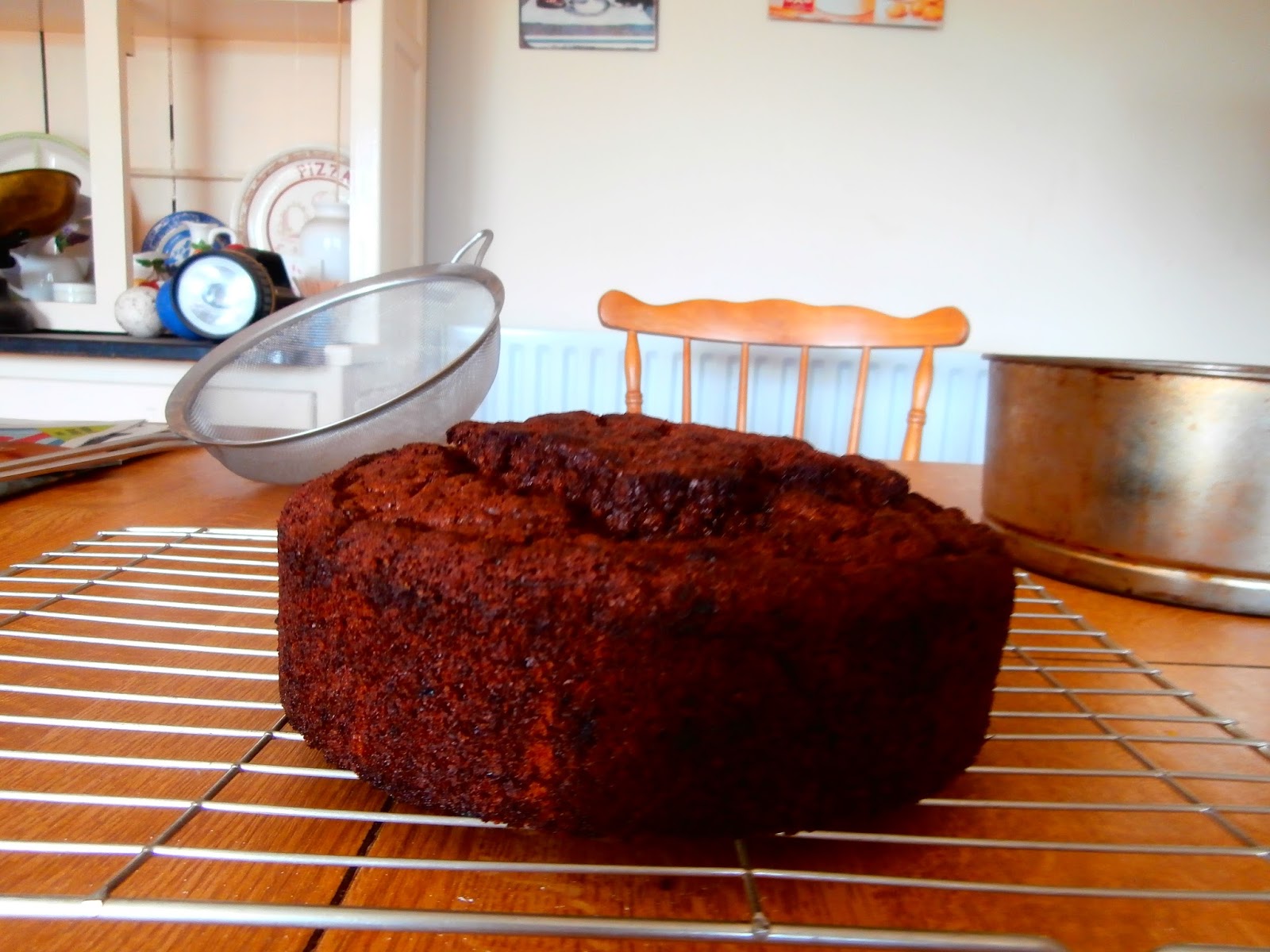
The finished cake - enjoy!

Stats today -

Eggs produced = 10

Sales -
1/2 dozen eggs £0.90

Expenses - 
Nil