Showing posts with label vegetables. Show all posts

Friday, 13 March 2015

Hello, I'm back

Hello everyone.  The blog is back!

Last year was a disaster on a number of counts and I got very disillusioned with the whole smallholding/gardening/better life/blogging scenario.  Farmers markets were tried and not a success, farmgate sales weren't any better, so I basically gave up.  So much so that we have had no winter veg this this year at all, apart from potatoes and onions and a few carrots.  Hubby has not been pleased to have been buying veg all winter.

Anyway that was last year.  I'm pleased to say things are back to normal again now, probably better actually.  I have renewed vigour and enthusiasm and the garden is looking all the better for it.  This is because I am having to follow a gluten free diet; that change has been overwhelming for me in terms of the amount of energy I have, the enthusiasm and willingness to get stuck in more than I think I've ever had.  Its fab!

So onwards and upwards.  I've got lots of ideas of things I want to change/improve/do on the smallholding so I hope you'll stick with me as I go through them.  Please feel free to comment on anything you feel you need to - I always look forward to reading your comments.

A few photos to see how things have changed/improved etc -
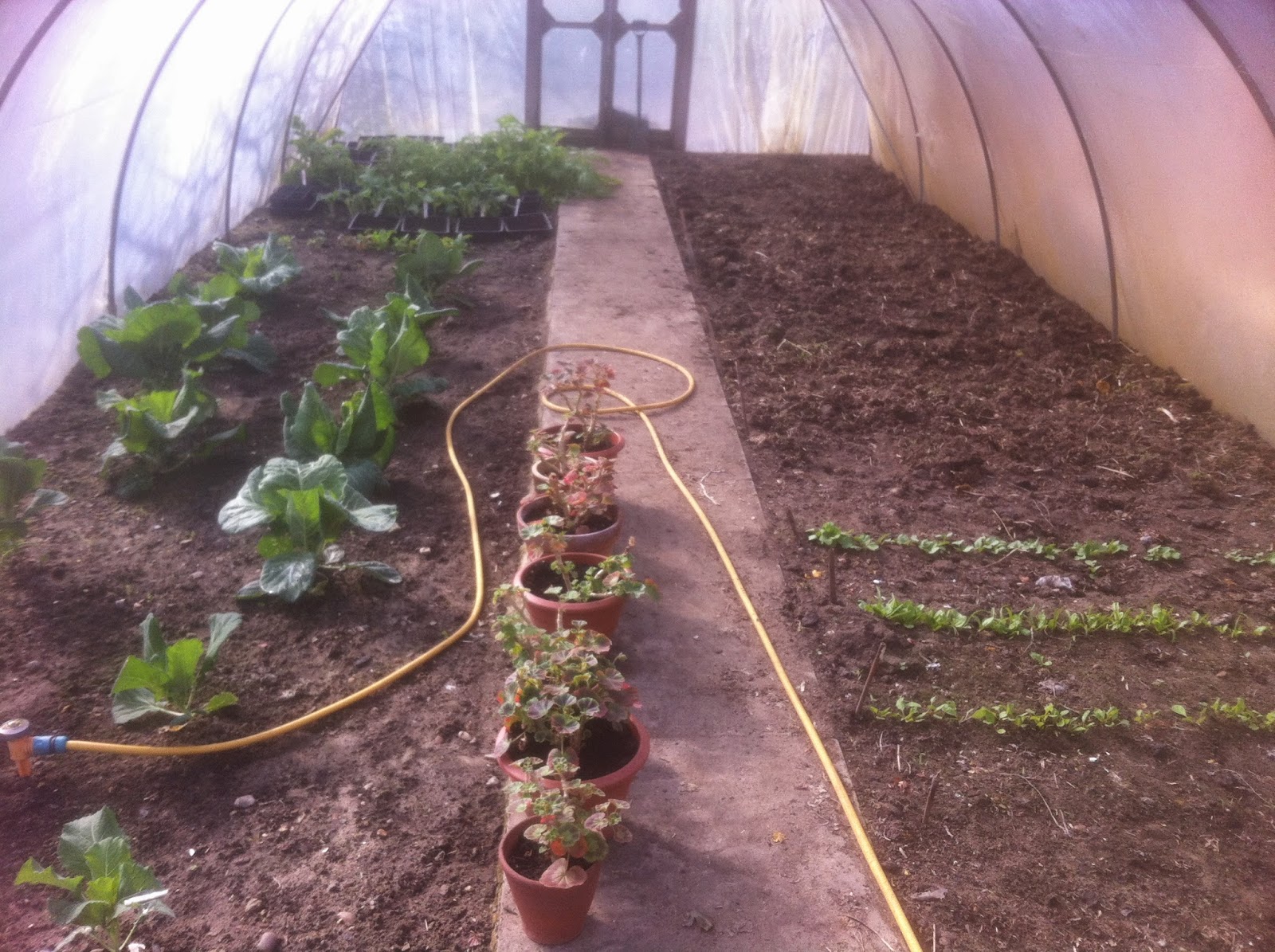

The polytunnel at the moment - Spring cabbages and overwintered salads on the left hand side.  More salads, radishes etc on the right.  Rest of right hand side bed is first early potatoes, put in a fortnight ago


Overwintered salads, and seed trays full of flowers, leeks etc


Peas under the cloches, the rest dug over and muck applied.  Only a small (weed-infested) piece left to dig over (top left)


Looking back towards the house.  Fabric fleece over some more spring cabbages, that aren't doing very well and so will get pulled up.  Canes are in for my Carnations


Garlic growing very well, despite only going in a fortnight ago


The 'new' veg patch.  Daffodils in the foreground


The patch being cultivated.  All poultry houses are now in this bit - two chicken houses (one currently empty and waiting for the new arrivals, hopefully at the end of the month) and one duck hut


Hubby's cultivating equipment! 

Monday, 17 February 2014

Compost

Over the last few days I have been sorting out my compost heaps, a job that here has never really been bothered with much.  Sounds crazy I know, considering the amount of plant material that is produced here, especially as I like to follow organic principles as far as I can.

Which got me to thinking - What actually is Compost?

I tested the internet with exactly that question and the first answer courtesy of Google was (and I'm quoting here),
'noun - decayed organic material used as a fertiliser for growing plants',
(read organic pertaining to once living, not as in the application/undertaking of organic farming principles)

'verb - make (vegetable matter or manure) into compost'

OK, so reading between the lines of those two statements, compost is the effect of decay on plant material and manure, which turns said material into a highly nutritious source of food for currently growing plants.

That sounds pretty darn good to me, free fertiliser that will help my existing plants grow big, strong and healthy.

According to www.bonnieplants.com and again I'm quoting here -
'Composting transforms garden and other vegetable waste into a dark, rich productive soil amendment the gardeners call Black Gold'

So in a way not only is it a form of fertliser/soil conditioner, it is a form of recycling too, and once said compost is incorporated into the soil it immediately improves the condition of that soil - making heavy soils easier to work - loosening them off and giving light soils better water retentive capabilities.  All round giving the plants better access to nutrients, therefore increasing the productivity of the soil.  WOW!

So, having turned all three bins, emptying one completely onto the manure pile I noticed that none of my resulting 'compost' looked like 'Black Gold'!  One was particularly dry, one particularly wet and the other wasn't too bad, although not quite decomposed enough.  More trial and research needed methinks!

First one emptied straight onto the manure pile, and yes I had help!

The other two still to go

The one that I thought didn't look too bad after turning

As above, but needs a bit longer I think


Friday, 18 October 2013

Bacon, Leek, Potato and cheese pie

Thought I had better give you the recipe for this as I had raved about it the other night, so here you go.  As usual I haven't stuck rigidly to the recipe (I never do!).

4oz Pastry - I used shortcrust, the recipe says use Flaky, but I don't see that it matters.  You can use frozen for this or homemade

Filling -
1 medium leek - I used two smaller ones and found that four of this size would be better
2 medium potatoes
7oz smoked bacon
1oz butter - the recipe says to use clarified, but I couldn't be bothered so used it straight from the pack
4 fl oz Milk
3 fl oz Single cream - I used double cream as I didn't have any single and it was fine
2 beaten eggs
2 tsps dried mixed herbs - I left out as I didn't have any
2 oz grated Double Gloucester cheese - I just used strong Cheddar instead, but used about 4oz
Salt and Pepper to taste


  • Preheat oven to 190C / 375F / Gas 5
  • Slice leeks into approx 1cm rounds and wash thoroughly
  • Peel and thinly slice the potatoes
  • Trim off the bacon rind and roughly chop
  • Roll out the pastry and line a 20cm flan dish, trimming the edges
  • Fry the bacon under the fat starts to render and it starts to go crispy.  Set aside on kitchen paper
  • Cook the leeks in the same pan and set aside with the bacon once soft
  • Add the butter and fry the potatoes until just coloured - you may have to do several batches
  • Spoon the leeks and bacon into the flan dish
  • I then added a generous layer of grated cheese and sliced a couple of tomatoes over the top
  • Arrange the potato slices over the top, overlapping to cover the other ingredients
  • Beat together the milk, cream, eggs, herbs and season well
  • Pour over the potatoes and top with more grated cheese
  • Bake for 30 - 45 minutes, covering with foil if it starts to brown too much
This is great served with a simple salad or with whatever veg you have available like we did.

Enjoy!


Stats today -

Eggs produced = 7

Sales -
1 dozen eggs £1.80
1 x 1Kg Onions £1.00

Expenses -
Nil

Sunday, 25 August 2013

Grouse anyone?

As this is August, I thought I'd treat you to some Grouse cookery, the first game bird of the season.  If you are lucky enough to acquire a brace of grouse at any time, then relish in them, they are delicious and a rare treat.  The first and the strongest taste of them all, as they feed nearly entirely on heather, the meat being dark red in colour but served simply roasted there is none better.  Because of the strong taste there is no need to hang them for long, two days is plenty, less if you don’t want them too rich.

The ‘Glorious twelfth’ - 12th August, is when the grouse season starts every year and lasts until 10th December.  A short season and the best birds available for the table are between the start of the season and mid-October.  The Red Grouse is a completely wild bird, rich brown in colour with spots of black and white across the male plumage, the hen has duller coloured feathers, but both have a bright red comb and feathery legs.  A medium sized bird with short, broad wings, short tail and head with a curved beak, they are built like chickens, almost partridge like with plenty of meat on them.  Other birds in the grouse family are the Black grouse, Capercailie and Ptarmigan. Red Grouse are native and resident all year round to heather moorland across the UK, but their numbers are dependent on the conditions within the moor to be able to provide food, shelter and nesting sites. 

As long as you know how old the bird is, cooking is easy; younger birds are best roasted, allowing the gamey flavour to shine through, without the need for lots of seasoning or additional flavours. Allow one bird per person when roasting whole.  Check them before buying, they shouldn’t smell ‘off’ in any way, they should be plump and not too shot all over.  To tell how old the bird is, the younger they are, the more pliable the breast bone will be, as will the feet and legs, the claws should still be sharp.  Older birds are best used in casseroles and stews.  

Before roasting, smear butter over the breasts then season and wrap bacon across the top, to save them drying out.  Roast in a hot oven for approximately 20-30 minutes, depending on how big they are and how pink you like your meat, don’t overcook as they will go dry; all game can be served and eaten pink; once cooked keep warm and leave to rest for 10-15 minutes, this will relax the meat and improve the taste.  Whilst resting prepare your gravy; use the juices from the roasting pan and add a little red wine or water and some redcurrant jelly to make quite a thin, but flavoursome sauce, taste and season if necessary.  Serve with roasted root vegetables of your choice, plus some good mash and braised cabbage, and pour over plenty of your rich, fruity gravy.  Delicious!

Enjoy!  More game cookery will follow throughout the season.

Friday, 23 August 2013

Fancy a holiday?

Fancy getting away from it all for a bit?  Need to attend to some family business? How on earth do you go about leaving the place, with all that needs looking after?

Well it can be done with a little prior planning and preparation.  Depending on how much needs attending to whilst you are away, will depend on who you can ask and how often they need to visit.

Friends and neighbours can be called upon to put chickens to bed and let out in the mornings, but their level of knowledge and confidence will depend on how much more they feel they can cope with; someone more professional with more experience may be needed, who will come and house-sit full-time.  The appointed person will come and ‘live-in’ for the duration of your holiday, giving you peace of mind whilst you are away with regards to security.  This works excellently if you have household pets, e.g. dogs and cats, as it means their routine is not disturbed.  All your required jobs will be fulfilled by the sitter, i.e. all animal feeding and watering, dog walking, polytunnels/greenhouse watered.

Finding a house sitter, can be a little problematic in itself.  Who is capable, knowledgeable and trustworthy?  Word of mouth is an excellent way, as you get an instant reference as a bonus.  Local smallholding societies who produce monthly magazines may advertise someone local, plus the internet is a good place to hunt too.   The person you choose ideally should be CRB checked, have full third party liability insurance and be able to provide references for you to follow up.

Before committing yourself, you should arrange for them to come for a pre-holiday visit, to view the property and you all get to meet in person.  This gives you an ideal opportunity to see if the person is suitable, if you like them, (they are staying in your house after all), and if they are willing to take the job.  Post visit you can, discuss payment, duties, start and finish dates.  Be prepared to pay a reasonable amount, labour is not cheap and they will be responsible for your property twenty four hours a day.

Whoever you choose, you need to make sure the appointed person understands exactly what needs doing.  Draw up a comprehensive list of duties, e.g.
·        
CChickens
AM – Feed and top up water.  Collect eggs
PM – Let out.  Collect eggs
EVE – Close up run and pop hatch.  Remove feed hopper to shed

·         Leave contact details for yourself and where you are staying, including any mobile numbers.
·         Leave details of where all feed and equipment is kept and where the keys are if any buildings are locked.
·         Notify Vets and the knacker man that you are away and who is staying in your place.  Also leave their contact details in the house for emergencies.
·         Let neighbours/close friends know who is staying, in case they pop in ‘on the off chance’.
·         Leave details of household necessities – bin collection days, stop taps, electricity meters.
·         Anything else you can think of – Central heating squeaks when first comes on, tap drips in kitchen, any vehicles being left at home, for security purposes.

Your expectations of the house sitter should be reasonable too.  Don’t expect them to take your dogs for a five mile walk if you don’t.  Make sure your feed and forage supply is adequate for the duration of their stay.  Also ensure your fencing is secure – enough said!  If it’s winter time, ensure a plentiful supply of heating fuel – oil, coal, logs, whatever it is you use.  The easier and more comfortable you make it for them, the more likely they are to want to come back.


The whole process may seem daunting at the outset, for both parties, but if the house-sitter is experienced in these matters, then all will be well, leaving you to relax and enjoy your time away in confidence.                       

Wednesday, 21 August 2013

Great British Bake off inspiration

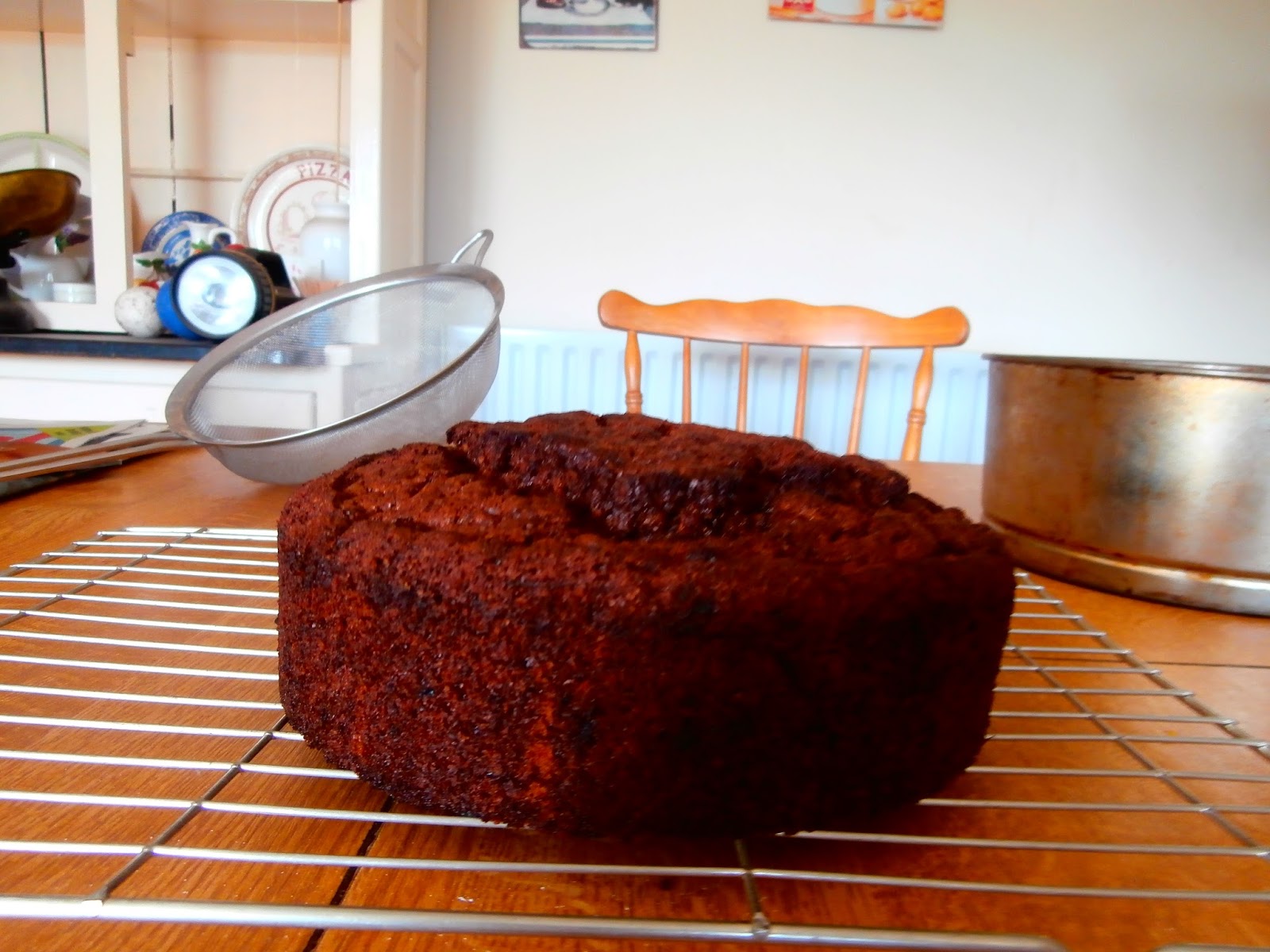
Inspired by the new series of the Great British Bake off, and keeping smallholding traditions alive, I've dug out an old favourite of ours - Chocolate Courgette Cake, don't worry you can't really taste the courgettes, it's a bit like the carrots in carrot cake.

I found this recipe in an edition of a smallholders magazine, cut it out and stuck in into one of my home-made recipe books.  I can't remember which magazine it was in, it was a number of years ago now, but I bring it out every year in courgette glut season.

Ingredients -

200g / 7oz Plain flour
1 tsp Baking powder
1/2 tsp Bicarbonate of soda
1/2 tsp Salt
115g / 4oz Sugar - I used granulated
2 Eggs
175ml / 6 fl oz Vegetable oil - I used sunflower
175g / 6oz Plain chocolate - use the best you can afford, I used Bournville
225g / 8oz Courgettes - doesn't matter what colour, mine were yellow


  • Sift together the flour, baking powder, bicarb, salt and sugar

  • Beat the eggs with the oil in a separate bowl

  • Place the chocolate in a Bain Marie, or in a bowl over a pan of hot water and let it melt slowly over the heat, don't let the chocolate bubble
  • Grate the courgettes and squeeze them gently to get rid of excess moisture
  • Beat the eggs and oil mixture into the dry ingredients and stir in the melted chocolate and courgettes

  • Spread the mixture into a greased cake tin, I used a deep round one that I make the Christmas cake in, and bake at 180Deg C / 350Deg F / Gas 4, for between 30 - 60 minutes.  If you find the top getting burnt and the inside still yet to finish cooking, place a sheet of tin foil over the top.
  • Remove the cake from the tin and let it cool.  Serve on its own or with cream, yoghurt etc


The finished cake - enjoy!

Stats today -

Eggs produced = 10

Sales -
1/2 dozen eggs £0.90

Expenses - 
Nil

Monday, 19 August 2013

Pesky Pests

I've had two main pest problems in the garden this year, cabbage white butterflies and moles.  I've talked about cabbage whites in earlier posts and the tribulations they've given us, the moles on the other hand have silently and unknowingly caused problems of their own.

The polytunnel is 80% full of tomatoes and every single plant has been undermined by the moles tunnels, excavations and hills.  Watering has been eventful as all of a sudden you find the hosepipe stream disappearing into a tunnel instead of on the soil around the plant.


Now I'm an animal lover and understand that all animals need access to shelter, but if they'd just moved twenty metres further away then they would be in the field and could tunnel away to their hearts content, have huge 'houses' out there and keep me happy too.  So I did some research in the library this afternoon, to better acquaint myself with the blind little critters.

It seems they are extremely sensitive to sound and scent and so various deterrents tend to use this to their advantage e.g.


  • Mothballs placed in the tunnels
  • Rags/material placed in the tunnels that are soaked in paraffin or some other highly flammable substance and set on fire!
  • Shop bought smoke bombs
  • Plastic bottles buried into the tunnels - the air that moves along the tunnel vibrates across the 'open' top causing a noise
  • Brambles placed in the tunnels - Ouch!
  • Soiled cat litter placed in the tunnels - Nice!
  • Traps can also be used that entrap the mole, killing it in the process

Those are the more normal ways apparently, there are some more obscure ones -


  • Buy a cat - cats will go out at night and catch moles and other damage causing animals - didn't know cats dug out moles, but I suppose it's when the mole surfaces that they catch them
  • Using an organic fertiliser containing castor oil meal.  Apparently it is poisonous (very organic - NOT!), but enriches the soil and discourages rodents of all types over a long period of time
  • The planting of caper spurge is a traditional method, which is to supposed to deter them - but I wanted to plant vegetables
All this to me seemed a lot of hard work for a few little creatures that were only trying to keep their house in order, and/or set up house for the first time.  I think I'll just carry on squashing the soil down around my tomato plants to level out the soil and raking out the molehills, they've got to live somewhere.


Molehills at various places in the garden - they certainly pick their places!

They do also have some endearing qualities, as they feed on chick beetles, cutworms, leather jackets and wireworms, and as I don't seem to have had a problem with any of these, maybe I should just be thankful for the moles and not all those listed above; they are after all a sign of good soil health as they feed on earthworms, so maybe I'm doing something right after all.

Stats today -
 
Eggs produced = 13

Sales -
1 dozen eggs £1.80
3 x 400g Tomatoes £3.00
1 x Cucumber £0.60

Expenses -
Nil

Friday, 16 August 2013

Leftover Beef Sturry

Tonight's delight is using up leftovers together with what we have available in the garden.  What true smallholders we are!

Seriously though, I hate wasting food, although I must admit not much gets wasted here, what with seven dogs, two pigs, sixteen hens and a cow.  But with the increase of food wastage always in the news and yesterday Natalie Coleman (winner of Masterchef), was on BBC Radio 2's Steve Wright in the afternoon, talking about her new campaign, 'Love food, Hate waste,' I always try and do something edible for us to eat with leftovers.

So tonight's leftovers being beef and it being Friday, well it had to be a curry - well sort of!  I am renowned for not sticking to recipes's, so I put my own twist on this 'curry'.  Michael likes lots of vegetables in his curries, not just a meat and onion curry with rice, so I raided the garden and collected - a large handful of french beans, a yellow courgette, a kohl rabi, one small carrot, half a dozen shallots, about twenty tomatoes and two chillies.

Collected from the garden

Plus, the already chopped tomatoes and shallots

I chopped all these up and placed them in a large casserole dish, along with the chopped up beef (minus any fatty bits - the dogs ate these!), added some water and a good shake of Bisto gravy granules, just to up the 'beefyness' and to thicken the sauce and put it in the oven for about an hour and a half.


 and this is what it looked like when it came out -


I served it with turmeric and parsley basmati rice and a shop bought naan bread each (which were horrible) -


It tasted delicious, you could taste all the vegetables and the beef was soft and succulent.  The two chillies were enough if you like it quite spicy.  I do think that this type of dish is best cooked in a slow cooker all day, left to bubble away and develop the flavours even deeper, it was a mistake not to do it with this I think.

Stats today -

Eggs produced = 9

Sales -
Nil

Expenses -
Nil

Saturday, 10 August 2013

Good old eBay!

Thanks to eBay and Rob from Tiptree in Essex, and to his wife for the coffee, drinks and chocolate biscuits (says Michael), I am now the proud owner of a fabulous new greenhouse and five cold frames.


Michael and Rob spent the afternoon dismantling the approx 6m x 2.4m aluminium greenhouse.  I've now got to decide what to grow for sale next year.

The deconstruction process -

Glass out from the sides

Roof off

Loaded and ready to come home

Michael would like to extend a huge thank you to Rob for helping him take it down, he was extremely helpful.

Can't wait for next year now, it's going to be a huge task to get it up, the base laid, staging in and the cold frames erected too, but it'll be well worth it.

Stats today -

Eggs produced = 10

Sales -
1/2 dozen eggs £0.90
1 x 500g Carrots £0.75
1 x Cucumber £0.60

Expenses -
Greenhouse and cold frames £383.00 (that's an awful lot of eggs and veg to sell!)