Stats for February 2014 are up now -
Sales -
13 dozen eggs = £22.00
3 bunches Daffodils = £1.50
Total = £23.50
Expenses -
Seed potatoes £9.45
Balance = £14.05
Expenses balance brought forward = £112.95
New Expenses balance to be paid off = £98.90
Well that mainly greenhouse expense balance is coming down, bit slow though. Hopefully we can have an early and warm spring, get things growing and producing
Showing posts with label stats. Show all posts
Showing posts with label stats. Show all posts
Saturday, 1 March 2014

Wednesday, 5 February 2014
January stats
Bit quiet on the stats front, but then I suppose it's to be expected in January.
Here you go -
8 & 1/2 dozen eggs £15.60.
Told you it was a bit quiet! February's not looking much brighter at the moment either!
Expenses balance = £128.55
New deficit balance = £112.95
Taking it's time to get rid of this balance, but at least it's going in the right direction. Sales, I don't suppose, will pick up until spring, patience is not one of my virtues!
Stats today -
Eggs produced = 5
Sales = Nil
Expenses = Nil
Here you go -
8 & 1/2 dozen eggs £15.60.
Told you it was a bit quiet! February's not looking much brighter at the moment either!
Expenses balance = £128.55
New deficit balance = £112.95
Taking it's time to get rid of this balance, but at least it's going in the right direction. Sales, I don't suppose, will pick up until spring, patience is not one of my virtues!
Stats today -
Eggs produced = 5
Sales = Nil
Expenses = Nil
Wednesday, 8 January 2014
Stats
Just realised I haven't given you the sales stats for a few months, so here you go -
October 2013
October 2013
| 12 doz eggs | 21.6 |
| 12 & 1/2 Kg Tomatoes | 12.5 |
| 2 x cucumber | 1 |
| 2 bags Bramley apples | 2 |
| 2 bags Plums | 2 |
| 4 bags Onions | 4 |
| 3 Pumpkins | 4.5 |
| 2 Cabbages | 1.4 |
| 49 |
November 2013
| 6 doz eggs | 10.9 | |
| 1 bag sticks | 1.5 | |
| 7 bags potatoes | 7 | |
| 19.4 |
December 2013
| 13.5 doz eggs | 24.8 | |
| 4 bags potatoes | 4 | |
| 1 bag sticks | 1.5 | |
| 30.3 |
Remainder of Greenhouse and other expenses = £227.25
Oct, Nov & Dec Sales = £98.70
Still left to pay off = £128.55, phew it's getting there! But we've soon got the seed order to buy! Oh well here's to an excellent 2014 season.
Friday, 2 August 2013
My easy bread recipe
Now this is a simple recipe that you can adjust/adapt to suit your needs - add cheese, herbs, fruit, veg etc. It's the one I use all the time. If it doesn't turn out quite how you want the first time, just keep at it, it gets easier the more you do it.
This basic mix makes one small loaf or six rolls -
1/2 tsp Salt
300g Bread flour - white, wholemeal, granary or a mixture of the three
300ml Warm water
1 tsp Dried yeast - I tend to buy the resealable 125g tubs of dried yeast, because I don't use the whole sachet if buying boxes of sachets; it's also cheaper.
Place the salt in the bottom of a large mixing bowl, tip the flour on top, scatter yeast over the flour and pour in the water.


Mix all the ingredients together well to incorporate all the flour, a fair amount can get left at the bottom of the bowl. At this stage it will be sticky, but don't worry, this results in a softer loaf, I find.


Put plenty of flour onto your work-surface and on your hands then tip out the mixture onto the work-surface, scraping out as much of the dough as possible.


Add more flour as it gets sticky, the flour will become incorporated into the dough as you knead.

Keep kneading until the dough becomes stiff, usually takes between 5 - 10 minutes.


Four and a half hours later, mine looked like this -


This basic mix makes one small loaf or six rolls -
1/2 tsp Salt
300g Bread flour - white, wholemeal, granary or a mixture of the three
300ml Warm water
1 tsp Dried yeast - I tend to buy the resealable 125g tubs of dried yeast, because I don't use the whole sachet if buying boxes of sachets; it's also cheaper.
Place the salt in the bottom of a large mixing bowl, tip the flour on top, scatter yeast over the flour and pour in the water.

All the ingredients in. This is a double, i.e. 600g flour, 600ml water etc, and a mixture of wholemeal and granary - I was using up bags of flour

All the ingredients added - white flour
Mix all the ingredients together well to incorporate all the flour, a fair amount can get left at the bottom of the bowl. At this stage it will be sticky, but don't worry, this results in a softer loaf, I find.

Brown mix

White mix
Put plenty of flour onto your work-surface and on your hands then tip out the mixture onto the work-surface, scraping out as much of the dough as possible.


Now for the kneading! Don't hold back, you can use them muscles. Start pushing, pulling and stretching the dough, after each stretch give the dough a quarter turn.


Keep kneading until the dough becomes stiff, usually takes between 5 - 10 minutes.

The kneading finished
Place the dough back in the same bowl you mixed it in, cover it with cling film and leave it aside, to rest and rise in a warm room for a couple of hours at least; even better, leave it overnight in the fridge.


Brown flour dough

White flour dough
Notice all the bubbles - that's normal.
Give the bowl a bang on the work-surface, watch the dough as it should sink quickly.
Tip the dough out onto a well floured surface and divide with a blunt knife into six for rolls or leave whole for a loaf. Shape the dough. If making a loaf, shape into an elongated shape and drop into a greased loaf tin. If making rolls, shape each roll and place on a greased baking sheet.

White rolls

Brown rolls
Leave them for about an hour, or until they have doubled in size, this is the second rising. Preheat your oven to 180 Degrees centigrade / Gas mark 4.
Once they had doubled in size,
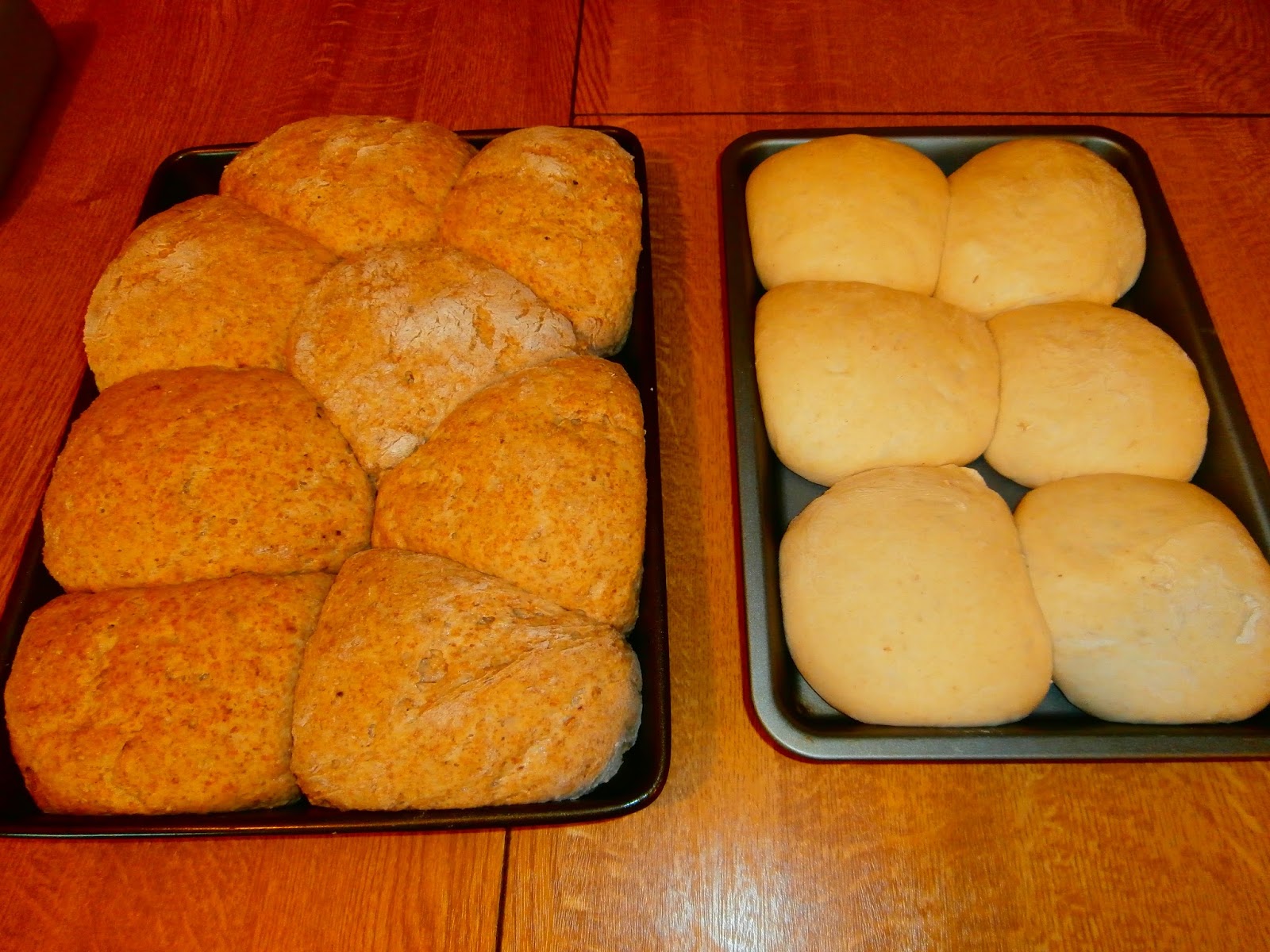
bake in the oven for between 20 - 30 minutes (loaves take nearer the 30 minutes), until crisp on top and sound hollow when tapped on the bottom. I tend to take them out of their tins and put them back in the oven for about five minutes to crisp up the bottoms. Once cooked transfer them to a wire rack to cool. Once cool they can be frozen.


The finished rolls, top pic shows the crumb
They are rustic, but better for you than that stuff they sell in the supermarkets without all the preservatives in them. They make fab toast, with lashings of butter and jam!
TIP -
When washing up the dough bowl and utensils, rinse everything in cold water first, using your fingers to dislodge the dough remnants , then wash as normal. Otherwise the hot water starts to cook the dough and it sticks to EVERYTHING!
Stats today -
Eggs produced = 12
Sales -
1 dozen eggs £1.80
1 x Geranium plant £1.50
1 x Cucumber £0.60
Expenses -
Nil
Subscribe to:
Posts (Atom)