Showing posts with label cucumber. Show all posts

Monday, 2 September 2013

Fabulous day yesterday

Michael and I had a fabulous day yesterday.  We went to a poultry auction!


Now round these parts Fabian Eagle is renowned for his poultry auctions, regularly holding one at Swaffham.  Yesterday's sale was the 24th Annual Summer auction at Eldon Farm Auction Centre, Mildenhall.

Deadstock and Cagebirds started at 11am; 11.30am saw Waterfowl followed by Pheasants; 12noon saw Pigeons followed by Large fowl and finally Bantams.  Two auctioneers were simulaneously selling, it was a hive of activity.  Over 700 lots were auctioned off, excluding all the deadstock of drinkers, rearing equipment and incubators.

I was amazed at the number of birds for sale, especially of ducks, I never knew there was such a wide variety of breeds.

Here are just some of the birds that were for sale -

A pair of Bourbon Red Turkeys on the left, which made £25 and a pair of Pied Turkeys on the right

A pair of Peafowl made £85

Light Sussex trio
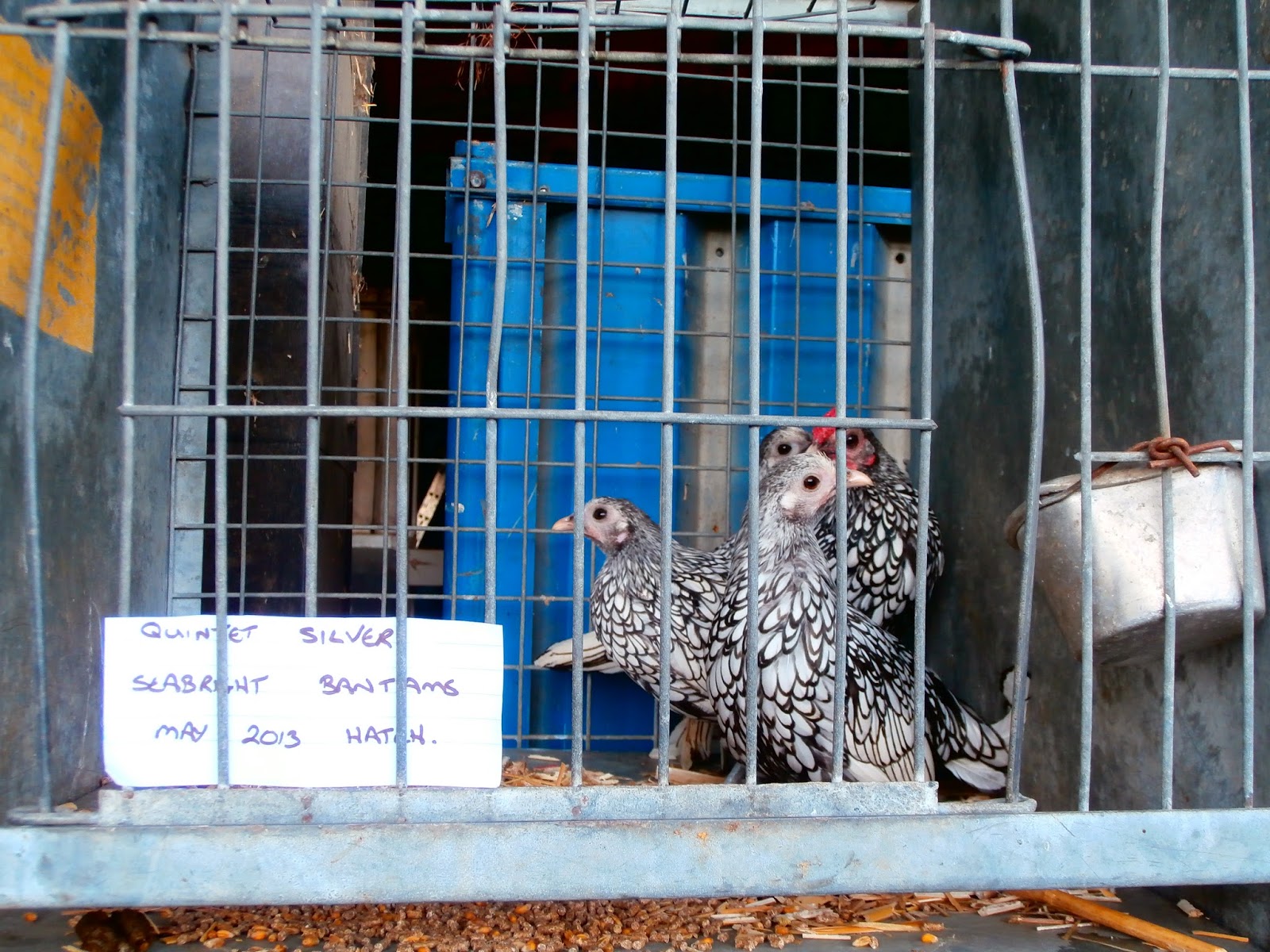
Seabrights

Bantam Buff Orpington quartet

Three Partridge Wyandotte pullets

Trio of Rouen, made £28

A pair of Buff African geese made £70

Trumpeter female Swan, lost her mate, made £150

Pair of Sebastopol Geese, made £70

Pair of Crested ducks

A pair of red and white Frillback pigeons, unsold, in fact not of the eight pens of pigeons sold

Two pairs of Arch Angel Pigeons

Trio of Speckled Sussex pullets, made £48

Trio of Buff Columbian Brahma, made £55, these were lovely, wanted to bring these home

Trio of Gold Seabrights

Pair of Bahama Pintails
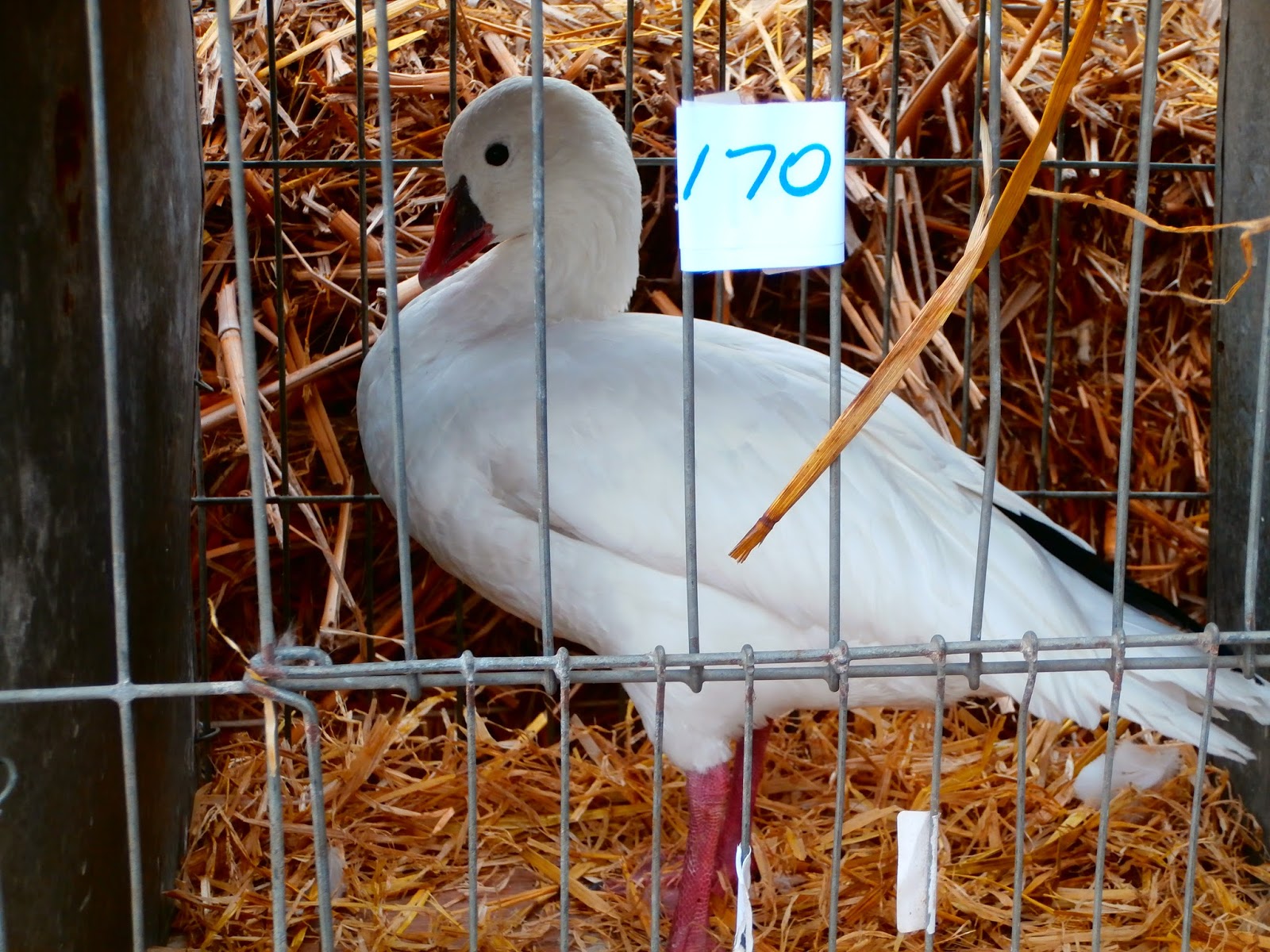
One Ross Gander, made £90

Pair of Orange Ringed Teal

Pair of Ross geese, made £120

Trio of Buff Laced Wyandotte bantams

Quartet of Buff Sussex pullets

Blue Splash rosecomb bantams

As you can see all and sundry were there, with some amazing prices being reached, but most making between £25 - £50 per pen.  Top price went to a quartet of Vulturine Guinea fowl, one male and three females, which made, a whopping £850!

You'll have to check back tomorrow to see if we came home with anything!

Stats today -

Eggs produced = 11

Sales -
2 x bags of Tomatoes £2.00
1 x Cucumber £0.60

Expenses -
Nil

Sunday, 1 September 2013

August Statistics

Well, August was a good month, takings were up on July, so am really pleased.

Here's the breakdown -

Sales -

22 dozen eggs £40.30
14 Cucumbers £8.40
8 Geranium plants £12.00
2 x Herb plants £1.00
3 bags Carrots £2.25
18 bags Tomatoes £16.50

Total £80.45

Expenses -

1 x Large Greenhouse £383.00

Still a long way to go to recoup the greenhouse money, but hey that was a long term investment, and it's now harvest time so fingers crossed we'll recoup in no time.

Today's stats -

Sales -

1 dozen eggs £1.80
1 x bag Bramley apples £1.00
1 x Tomatoes £1.00
1 x bag French beans £0.50

Expenses -

Nil

Thursday, 22 August 2013

How to make a Rat Bait feeder

Now being very rural here, we get 'bothered' with rats pretty frequently.  They burrow into the polytunnel and eat the tomatoes on the lower leaves and also help themselves to the chicken feed, not to mention that they've had two of my chicks.  So Michael makes his own secret feeders with attractive rat food in them.

The key with rat bait, is to keep it in place all year round, so the rats get used to it being there and to change your brand each time you run out, so that they don't get immune to the stuff.

Get hold of a length of 110mm plastic drainage pipe


Cut off a piece 1 & 1/2 metres long, no shorter as the bait will come out, and then birds and chickens will be able to eat it.


Off that 1 & 1/2 metre piece cut off approximately 150mm to make the cover.


On the longer piece, cut out a slot in the middle, in which you will pour the feed.  Make it smaller than the small cut piece, so that the cover will completely cover the hole.


Take the smaller cut piece and cut all the way down the long side, on both sides, but not exactly opposite each other, so that when you put in on the long piece it forms a secure clip.


Your rat bait feeder is now ready for use.


Keep it topped up at all times and clear up any spillage, so that garden birds and chickens cannot get near the poisoned corn.


As you can see above, Michael has secured the feeder with two stakes hammered into the ground, up against the fence.  Don't forget to replace the lid!


Monday, 19 August 2013

Pesky Pests

I've had two main pest problems in the garden this year, cabbage white butterflies and moles.  I've talked about cabbage whites in earlier posts and the tribulations they've given us, the moles on the other hand have silently and unknowingly caused problems of their own.

The polytunnel is 80% full of tomatoes and every single plant has been undermined by the moles tunnels, excavations and hills.  Watering has been eventful as all of a sudden you find the hosepipe stream disappearing into a tunnel instead of on the soil around the plant.


Now I'm an animal lover and understand that all animals need access to shelter, but if they'd just moved twenty metres further away then they would be in the field and could tunnel away to their hearts content, have huge 'houses' out there and keep me happy too.  So I did some research in the library this afternoon, to better acquaint myself with the blind little critters.

It seems they are extremely sensitive to sound and scent and so various deterrents tend to use this to their advantage e.g.


  • Mothballs placed in the tunnels
  • Rags/material placed in the tunnels that are soaked in paraffin or some other highly flammable substance and set on fire!
  • Shop bought smoke bombs
  • Plastic bottles buried into the tunnels - the air that moves along the tunnel vibrates across the 'open' top causing a noise
  • Brambles placed in the tunnels - Ouch!
  • Soiled cat litter placed in the tunnels - Nice!
  • Traps can also be used that entrap the mole, killing it in the process

Those are the more normal ways apparently, there are some more obscure ones -


  • Buy a cat - cats will go out at night and catch moles and other damage causing animals - didn't know cats dug out moles, but I suppose it's when the mole surfaces that they catch them
  • Using an organic fertiliser containing castor oil meal.  Apparently it is poisonous (very organic - NOT!), but enriches the soil and discourages rodents of all types over a long period of time
  • The planting of caper spurge is a traditional method, which is to supposed to deter them - but I wanted to plant vegetables
All this to me seemed a lot of hard work for a few little creatures that were only trying to keep their house in order, and/or set up house for the first time.  I think I'll just carry on squashing the soil down around my tomato plants to level out the soil and raking out the molehills, they've got to live somewhere.


Molehills at various places in the garden - they certainly pick their places!

They do also have some endearing qualities, as they feed on chick beetles, cutworms, leather jackets and wireworms, and as I don't seem to have had a problem with any of these, maybe I should just be thankful for the moles and not all those listed above; they are after all a sign of good soil health as they feed on earthworms, so maybe I'm doing something right after all.

Stats today -
 
Eggs produced = 13

Sales -
1 dozen eggs £1.80
3 x 400g Tomatoes £3.00
1 x Cucumber £0.60

Expenses -
Nil

Sunday, 18 August 2013

Another tidy up

Had a right good, and yet another, tidy up this weekend.

The brassica end of the garden had become overgrown with weeds, which had grown to the same height as the brassica's, unfortunately not putting off the Cabbage white butterflies, who flew in earnest and dogged determination to find their 'prey'.  So we set about pulling out the weeds and eventually saw the fruits of our labours in some fabulous looking brassicas.  We were delighted.  We won't starve this winter.


Unfortunately they haven't survived the onslaught from the cabbage white's so at least another hour or so was spent squashing newly hatched caterpillars and smothering yellow clutches of eggs.

The next task was tidying up the tomatoes in the polytunnel, again.  I seem to be forever in there!  I don't think I'd remembered how labour intensive tomatoes can be.  The plants are overflowing with fruit and as a result getting tremendously heavy,  the stems are really struggling to cope.  I waded in with yet more canes and copious amounts of string, taking off unwanted leaves and side shoots as I went.  Due also to the amount of fruit on them I took off the tops to stop them producing any more. At least half of the plants had completely fallen over, the existing canes either snapped at soil level or just not man enough to cope with the weight.  Emerging two hours later, the polytunnel was tidy and happy again; I on the other hand needed to take a scrubbing brush to my hands!


Well pleased with the toms this year though, looking forward to eating them!  Have also declared I am no longer eating supermarket tomatoes, they are expensive and tasteless, rather just have a green salad.

Stats today -

Eggs produced = 13

Sales -
1 dozen eggs £1.80
2 x Cucumbers £1.20

Expenses -
Nil

Tuesday, 13 August 2013

Chicken hut considerations - Part two

As I said yesterday there are umpteen designs of poultry house, in fact we have two completely different designs here - see photo's below.  I must admit I do like the houses that are raised off the ground for several reasons; security from rats and foxes; warmer as the hut is not sitting on the cold ground; a dry area in case it rains.

This one we purchased a few years ago, complete with the chickens, as somebody Michael was working for had just had enough of them.  It has a detachable run, and the main hut is off the ground, the pophole door is also closable at night.  I love this hut, it has everything you need in a serviceable hut for chickens.

The side lifts out for ease of cleaning

The roosting perch also lifts out for ease of cleaning

The pophole at the front, with replaceable door

Nesting boxes attached to the side of the hut

I find this a really easy hut to live with, apart from the nesting box lid has no catch on it, so you have to prop it open with your elbow when cleaning and collecting eggs.

I have just cleaned both the houses out today and on the one above I find it easy if I put a newspaper layer in the bottom of each of the nesting boxes then the bedding on top, you just then lift out the newspaper with the soiled bedding on top.

The other house we have is a 'made by my husband' one, many years ago.  It is wonderful and has seen many chickens over the years.  It is larger and can house up to fifteen hens, whereas the above one can house approximately ten.


This was our very first chicken hut that Michael made when we got together, some twelve years ago or so. It has seen some use, but is still perfectly serviceable.  Again the run is detachable.  We find having a run on the side a real bonus.  It allows the chickens to be out, but they then lay their eggs in the hut, which makes for easy collection.  They are then let out in the afternoons to scratch and dust bathe.  

Inside both runs are a drinker and feeder, stood on a large lump of wood, to make it easier for the chickens to reach.  As you can see the run above also has an openable door - this is a new addition, before you had to heave the run about each time you wanted to let the hens out.


Both lids on the top of the run are moveable too, which makes it easier when putting in the drinker and feeder.


The difference with this house is that it doesn't have any nest boxes, a mistake Michael always says.  The hens lay their eggs on the floor in the left hand corner of the hut (as you look at the picture).  The eggs can get dirty because of this as the perches are directly above where they lay, I do have to be scrupulous in my cleaning in that area.  Can you tell I'd just put clean straw in?  Such inquisitive creatures.

Tomorrow I will look at beddings, feeds and other equipment needed to kit out your house.

Stats today -

Eggs produced = 11

Sales -
1 dozen eggs £1.80
2 x 400g Tomatoes £1.50
1 x Cucumber £0.60

Expenses - 
Nil